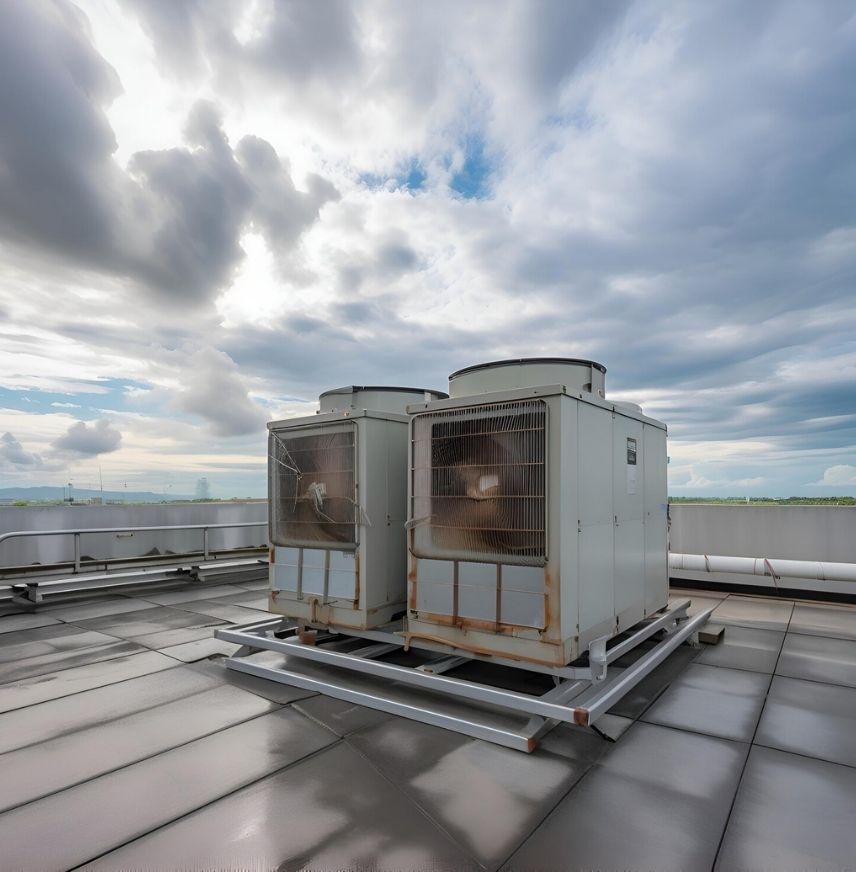
A condenser is an important component in cooling systems, typically used to convert refrigerant from a gaseous state to a liquid state. This process involves heat transfer and plays a critical role in the overall efficiency of the system. The working principle of the condenser relies on heat transfer and phase change.
A typical cooling system consists of four main components: the compressor, evaporator, condenser, and expansion valve. These components ensure the continuous flow of refrigerant within a specific cycle. The refrigeration cycle transfers heat from one environment to another, resulting in changes in the refrigerant's state.
The condenser is the point where the refrigerant changes from a gas to a liquid. This process occurs when the hot refrigerant from the evaporator enters the condenser. The incoming hot gas absorbs heat from the surrounding air or water source. Through this heat transfer, the gas is converted into a liquid and exits the condenser. There are two main types used in this stage: air-cooled and water-cooled condensers. Air-cooled models use outside air, while water-cooled condensers rely on water sources.
The effectiveness of the condenser directly impacts system efficiency. Converting gas at low temperatures and high pressure improves heat exchange. This process helps reduce the energy consumption of the compressor and enhances the overall performance of the system. The size and design of the condenser can vary based on application requirements. The correct size ensures optimal energy consumption and increases system reliability.
During the operation of the condenser, regular maintenance and cleaning should be performed. This enhances system efficiency and prevents failures. Dust and dirt can affect heat transfer. Therefore, the condenser should be regularly monitored to ensure airflow and improve cooling efficiency.
Condensers are vital in refrigeration processes. These components not only convert the refrigerant's state but also enhance energy efficiency and overall system performance.
The most important function of condensers is to convert the gaseous refrigerant into a liquid. The refrigerant, in the form of hot gas from the evaporator, enters the condenser. At this stage, the gas absorbs heat from the surrounding environment and transforms into liquid form. This phase change point is critical as it forms the basis of the cooling process.
The efficiency of heat transfer is another important function of condensers. Typically, condensers transfer heat to the external environment via air or water sources. While air-cooled condensers utilize external airflow, water-cooled condensers benefit from water's heat transfer properties. Proper design and materials contribute to increased heat exchange and reduced energy loss.
Condensers also help maintain pressure balance in the refrigeration system. The conversion of gas to liquid regulates pressure within the system, reducing the workload on the compressor. This state allows the compressor to operate more efficiently with less energy consumption, thereby lowering operating costs.
Condensers also play an important role in reliability by maintaining their efficiency through regular maintenance. Preventive measures against issues like contamination and clogging extend the lifespan of the system. Smooth airflow and unobstructed liquid flow ensure the condenser operates correctly.
Condensers are crucial components used in refrigeration systems, and different types are designed specifically for certain applications. Choosing the appropriate type of condenser based on the cooling system's requirements is critical for energy efficiency and system performance.
Air-cooled condensers are among the most common types. They are often used in small to medium refrigeration systems. In air-cooled condensers, the hot gas transforms into liquid when it contacts the external air. These condensers are popular due to their low costs and minimal maintenance needs. They are frequently used in homes, office buildings, and small industrial applications.
Water-cooled condensers are another option preferred in larger, higher-capacity systems. These condensers use water sources to perform heat transfer. Water refrigeration systems are typically found in large factories, data centers, and large buildings. These systems offer high efficiency but generally require more maintenance. Additionally, the availability of a water source is an important factor in choosing water-cooled condensers.
Compact condensers are particularly preferred in applications with limited space. These types of condensers are usually found in small portable refrigeration systems and commercial refrigerators. Their compact design offers energy efficiency and ease of installation. They are commonly used in the food sector, marketing, and retail.
Split condensers are another popular choice, especially used in central ventilation systems. In these systems, the condenser and evaporator exist as separate units. Split systems are flexible, allowing easy application in different locations. They also reduce noise in the external environment, providing comfort.
Reverse flow condensers are especially preferred in high-heat recovery systems. These types of condensers recover heat during the gas-to-liquid conversion process, increasing system efficiency. They are typically found in industrial applications and power plants.
Several factors need to be considered in condenser design, which are crucial for system efficiency, reliability, and performance. These factors should be taken into account both in engineering design and application stages.
Heat transfer efficiency is one of the primary elements to be evaluated. The heat transfer surface area in the condenser determines the efficiency of the gas-to-liquid conversion process. Surface area and heat transfer coefficient are key factors that affect heat exchange. To ensure high efficiency, suitable materials should be selected and design improvements achieved.
Material selection is vital for the durability and lifespan of the condenser. Corrosion-resistant and high-temperature materials should be preferred. This point is critical, especially for water-cooled condensers. The materials exposed to water continuously should be reliable and long-lasting.
Airflow and water flow design directly impact condenser performance. In air-cooled condensers, fans and grids must be carefully designed to optimize the flow of external air. In water systems, even distribution of water and homogeneous fluid transfer should be ensured. Blockages in fluid flow can reduce efficiency.
The size of the condenser is also an important factor. The condenser size should be determined based on the system's capacity and needs. Incorrect sizes can negatively impact energy efficiency and lead to reduced cooling system performance. A design that is too large or too small for the requirements can increase costs and energy consumption.
Safety and accessibility issues should also be considered. Designing the condenser for maintenance, cleaning, and repair operations enhances long-term system efficiency. A design that facilitates user access encourages regular maintenance.
Environmental factors play a significant role in condenser design. Ambient temperatures, humidity levels, and air quality can affect condenser efficiency. Therefore, it is important to evaluate environmental conditions during the design phase.
The energy efficiency of the condenser is an important element that directly impacts the overall performance and costs of cooling systems. Energy efficiency means reducing the energy consumption of the system and enabling it to operate more effectively. This contributes to lower operating costs and reduces environmental impacts.
The efficiency of the condenser is closely related to the effectiveness of the heat transfer process. A high-efficiency condenser converts gas to liquid with minimal energy loss. As a result, the compressor requires less energy consumption, improving the overall performance of the system.
High energy efficiency can enhance the competitiveness of businesses. It can reduce operating costs, allowing companies to lower prices and increase customer satisfaction. Energy efficiency also promotes environmental sustainability. Since high-efficiency condensers reduce energy consumption, they contribute to lower carbon emissions.
Regular maintenance is essential for achieving high energy efficiency. Contaminants, inadequate airflow, and dirt accumulation can affect condenser performance. Therefore, maintenance and cleaning should be performed periodically.
The effectiveness of the condenser's design is a factor influencing energy efficiency. Good design and appropriate material selection play a role in enhancing condenser performance. Improving heat transfer surface area and optimizing airflow design can significantly contribute to energy efficiency.
Modern control technologies also help improve energy efficiency. Sensors and smart systems can help achieve optimal performance and reduce energy consumption. Smart control technology allows precise adjustments based on system needs.
Additionally, companies should adhere to sustainable design and operational practices. Investing in high-efficiency condensers leads to long-term positive environmental impacts. These practices promote the sustainability of natural resources.
Quality standards for materials in condenser design are critical to ensuring their performance and reliability. High-quality materials ensure that condensers operate effectively and achieve a long lifespan.
Durability is one of the most important quality criteria. The materials used in condenser design should withstand harsh conditions such as high temperatures and pressure. Metals like copper and stainless steel are common choices. These materials possess high strength and corrosion resistance.
Resistance to corrosion and environmental impacts is another important factor. Condensers face problems due to corrosion from moisture and chemicals. Therefore, corrosion-resistant materials, such as aluminum alloys or special coatings, should be preferred.
Quality can also affect heat transfer efficiency. The materials used in the condenser should enhance heat flow and facilitate the conversion process. Materials with high thermal conductivity contribute to the condenser's effectiveness.
Ease of installation is also an important point. Lightweight and easy-to-install materials speed up the installation process and reduce maintenance costs. They also facilitate regular maintenance for users.
Environmental issues should also be considered. The materials used in condensers can impact the environment. Therefore, recyclable and environmentally safe materials should be used.
High quality can help reduce operating costs. High-quality materials ensure a longer lifespan for condensers and reduce the need for frequent replacements. This can lead to long-term cost reductions for businesses.
In general, the quality standards for materials in condensers play an important role in performance and efficiency. The appropriate use of high-quality materials contributes to energy efficiency and enhances system reliability.

Fill out the form to discover the most suitable high-quality products for your business. Contact Us Now.

To an English person, it will seem like simplified English, as a skeptical Cambridge friend of mine told me what occidental in fact.
 Notification Center 00:00